
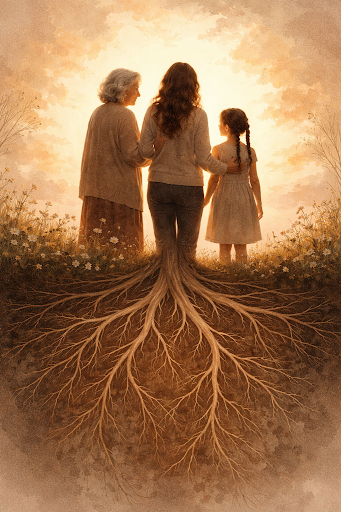
For the Women Who Came Before Us
Sara Mathew, MSC Intern
Some of the most important women in history will never make it into the books.
They won’t have monuments or months dedicated to them. But they built things anyway — families, homes, communities, and people. They showed up when showing up was hard. They loved fiercely, worked tirelessly, and held the world together in ways that were rarely acknowledged and almost never thanked. They did things without Google, without therapy, without anyone telling them their feelings were valid. They navigated loss, hardship, and impossible choices — and still made dinner, still showed up, still loved people through it. Many of them never complained. Many of them never stopped.
There were likely women in your life who were remarkable — maybe a mother, a grandmother, an auntie, or even your favorite teacher. Not just the famous ones. And not just the “good” ones. The homemakers, the executives, the mom who never missed a game. The ones who always figured it out. The women who built something out of nothing because someone had to.
So take a second to think about her. The woman who comes to mind when you read this. Let yourself feel grateful for her, complicated feelings and all.
This Women’s History Month, we want to celebrate those women.
She deserves that moment. And so does the part of you that she helped build.
Breaking Cycles
Not every foundation that was built was a strong one. And many of the women who came before us knew that, even if they didn’t have the words for it. They could feel something repeating. Something being passed down that didn’t need to be. And some of them decided, quietly or loudly, that it would stop with them.
They didn’t always know what to call it. They may never have heard the term intergenerational trauma. But they felt it, and they did something about it anyway. They went to therapy, they prayed, they left, they stayed, they set boundaries no one in their family had ever set before. They did what they could with what they had — and then they reached for more.
That takes courage. Especially when the world was telling them to comply, to be quiet, to keep the peace. Especially when no one around them was doing the same. Those women deserve to be celebrated too.
What Gets Passed Down
Celebrating them fully means being honest about the whole picture. We don’t just inherit the recipes and the resilience. We inherit the weight they carried too.
Families pass down ways of moving through the world. How to handle pain, whether emotions are safe to express, what love looks like in practice, what you do when life gets hard.
And most of this happens without anyone meaning to.
Sometimes what gets passed down is wisdom. And sometimes it’s wounds. This is what intergenerational trauma is. It’s not that your grandmother deliberately handed you her anxiety, or that your mother chose to teach you to shrink. It’s that the nervous system learns from what it’s around. Trauma doesn’t just live in memory, it lives in the body. In the way you flinch. In the tightness in your chest before a difficult conversation. In the part of you that still braces for impact even when there’s no danger.
Patterns get passed down unconsciously, quietly, through the texture of everyday life. Through what was said, what was never said, and what was felt but never named.
And none of that is anyone’s fault.

Holding Both Things at Once
Here’s what I think is important to say clearly: the women who came before us were doing the best they could with what they had.
Many of them had no language for what they were carrying. No therapist, no framework, no permission to fall apart. They survived by going numb, staying busy, and keeping the peace. Those were not failures. They were adaptations.
They were survival.
But survival strategies have a way of outliving their purpose. What kept your grandmother safe might be the same pattern that’s keeping you stuck. Choosing a different path isn’t a betrayal of her legacy. It’s what she would have wanted for you.
You can honor someone’s resilience and still choose to live your life differently. Those two things can exist at the same time.
Healing as Honoring
Choosing to heal is not a rejection of the women who came before you. It’s one of the most profound ways to honor them. Whether the women who shaped you were a source of comfort, a source of pain, or a complicated mix of both, healing is still the most powerful thing you can do with what they left you.
When you go to therapy, when you learn to name what you feel, when you set a boundary you were never taught you were allowed to have, you are doing something those women may never have had the chance to do.
Healing doesn’t mean erasing where you came from. It means putting in the work to know yourself — shining a light on the inherited and learned parts of you, and choosing which ones to carry forward. You get to keep what serves you and gently put down what doesn’t.
You’re not saying they were broken. You’re not saying they did a bad job. You’re saying their sacrifices meant something, and you’re not going to waste them.
The cycle doesn’t have to continue just because it always has. Healing is how you love them back.
You Don’t Have to Do This Alone
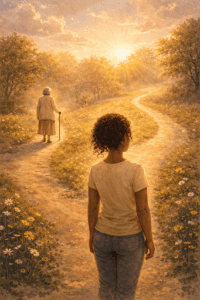
Understanding how the past lives in your body and your relationships is not easy work but it’s some of the most meaningful work there is. If you’re curious about what patterns you might be carrying, or ready to start untangling some of what was handed to you, our therapists at Mindful Springs are here for that.
This is exactly the kind of work we do and we’d be honored to be part of your story.
Mindful Springs Counseling is a nationwide mental health center specializing in non-traditional therapy services like Brainspotting and Ketamine-Assisted Psychotherapy and 100% independently owned by Aimee Solis, Founder and Executive Director. Mindful Springs has locations in Colorado, Washington and Illinois.
