
The Things We’ve Learned Not to Notice
Sara Mathew, MSC Intern
In honor of Sexual Assault Awareness Month, this is a gentle trigger warning to let you know we are discussing a difficult and important topic. Please protect your mental health and skip this read if needed.
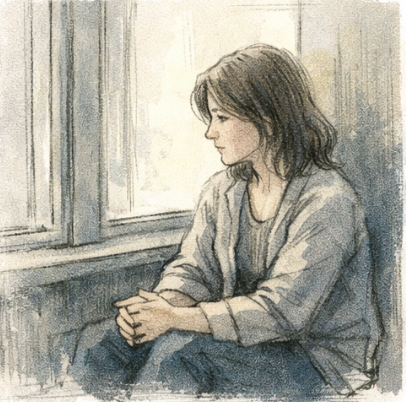
Maybe she was walking to her car and someone catcalled her. Maybe a hand landed somewhere it wasn’t invited. Maybe someone kept pushing after she said no, and she eventually said yes just to make it stop. Maybe her boss made a comment that everyone else laughed at. Maybe a date got a little too insistent and she spent the whole drive home trying to figure out if what just happened was bad enough to be upset about.
Bad enough.
That phrase is worth sitting with, because it tells us something. It tells us that somewhere along the way, we all learned there was a threshold. A line between what counts and what doesn’t. What qualifies as real harm and what you’re supposed to just move through and forget.
Most of us learned that lesson without anyone ever directly teaching it to us.
How Normalization Happens Without Our Permission
The truth is, we are surrounded by messages about what is and isn’t acceptable when it comes to bodies and boundaries. Those messages don’t always arrive as well developed lesson plans. They arrive as punchlines. As background noise. As the way men talk in movies and the way women are talked about in songs. As the joke your uncle made at Thanksgiving that everyone let slide. Like the scene in your favorite movie that made you vaguely uncomfortable but you couldn’t explain why, so you stayed quiet.
When something is everywhere, the brain starts to treat it as normal. This is not a character flaw. It’s how human beings are wired. We adapt to our environment. We learn what to flag as dangerous and what to file away as just how things are.
The problem is that sexual harassment, coercion, and sexual violence have been woven so deeply into our cultural fabric that many of us have spent years learning not to notice them. Or more accurately, learning to notice them and then talk ourselves out of what we noticed.
That’s just how he is. That’s just how it goes. It wasn’t that bad. At least it wasn’t worse.

What Happens When We Minimize Our Own Experiences
One of the quietest and most lasting effects of normalization is what it does to the way we interpret our own lives.
When we grow up absorbing the message that certain phrases and actions are completely normal parts of life, we lose access to our own reactions. We second-guess ourselves. We ask whether what happened to us “counts.” We compare our experience to something “worse” and decide ours doesn’t qualify. We wonder if we’re being dramatic. We wonder if we should be over it by now.
This is what happens when we have been taught to distrust ourselves.
And it matters, because if something doesn’t count, we don’t process it. If we don’t process it, it doesn’t go anywhere. It just sits there, underneath the surface, showing up in ways we might not immediately connect back to its source. In how safe we feel in our body. In how we move through relationships. In the way we brace without knowing that we’re bracing, let alone why.
The commonality of an experience does not make it harmless. It just makes it harder to recognize as something that happened to you.
If You’ve Ever Questioned Whether It Was Bad Enough
If you’ve been adding up the moments and wondering whether they total something real, they do.
The comment that made your skin crawl. The situation you didn’t know how to get out of. The time you said yes when you meant no, because no didn’t feel like an option. The things you didn’t tell anyone because you weren’t sure how to explain them, or because you were afraid no one would understand, or because you were embarrassed that they were still with you.
Those things happened. They meant something. You are allowed to name them.
But you don’t have to call it anything in particular. Sometimes you don’t have the words for it and sometimes the words feel too heavy. You don’t have to meet some threshold before you’re permitted to feel the weight of it. Common does not mean insignificant. Frequent does not mean harmless. And not having the words for something has never meant it didn’t happen.

The Possibility of Something Different
The fact that so many people carry these experiences means that healing is something many, many people have found their way through. Not by minimizing what happened. Not by deciding it didn’t count. But by being in spaces where they were finally allowed to name it, and where someone sat with them in it without flinching.
That is what healing asks for. Not toughness. Not a perfect story. Not certainty about every label or detail. Just a place where you’re allowed to bring the full truth of what you’ve been carrying and have someone say: I see it. It’s real. You don’t have to keep talking yourself out of this.
Conversations about consent, about safety, about what we want relationships and communities to look like, are possible. Not easy, but possible. And they start with the willingness to stop accepting the things we’ve been taught to look past.
We have all learned not to notice certain things. Part of healing is deciding what deserves to be noticed after all.
If you’ve been carrying something you’ve never had the right space to talk about, we’d be honored to be that space. The therapists at Mindful Springs are here to support you, gently and without judgment, in whatever you need to say.
Mindful Springs Counseling is a nationwide mental health center specializing in non-traditional therapy services like Brainspotting and Ketamine-Assisted Psychotherapy and 100% independently owned by Aimee Solis, Founder and Executive Director. Mindful Springs has locations in Colorado, Washington and Illinois.